
Wrap-around Extension
Create more than just one area and maximise your space.
No obligation · Response within 24 hours
Benefits of a Wrap-around Extension.
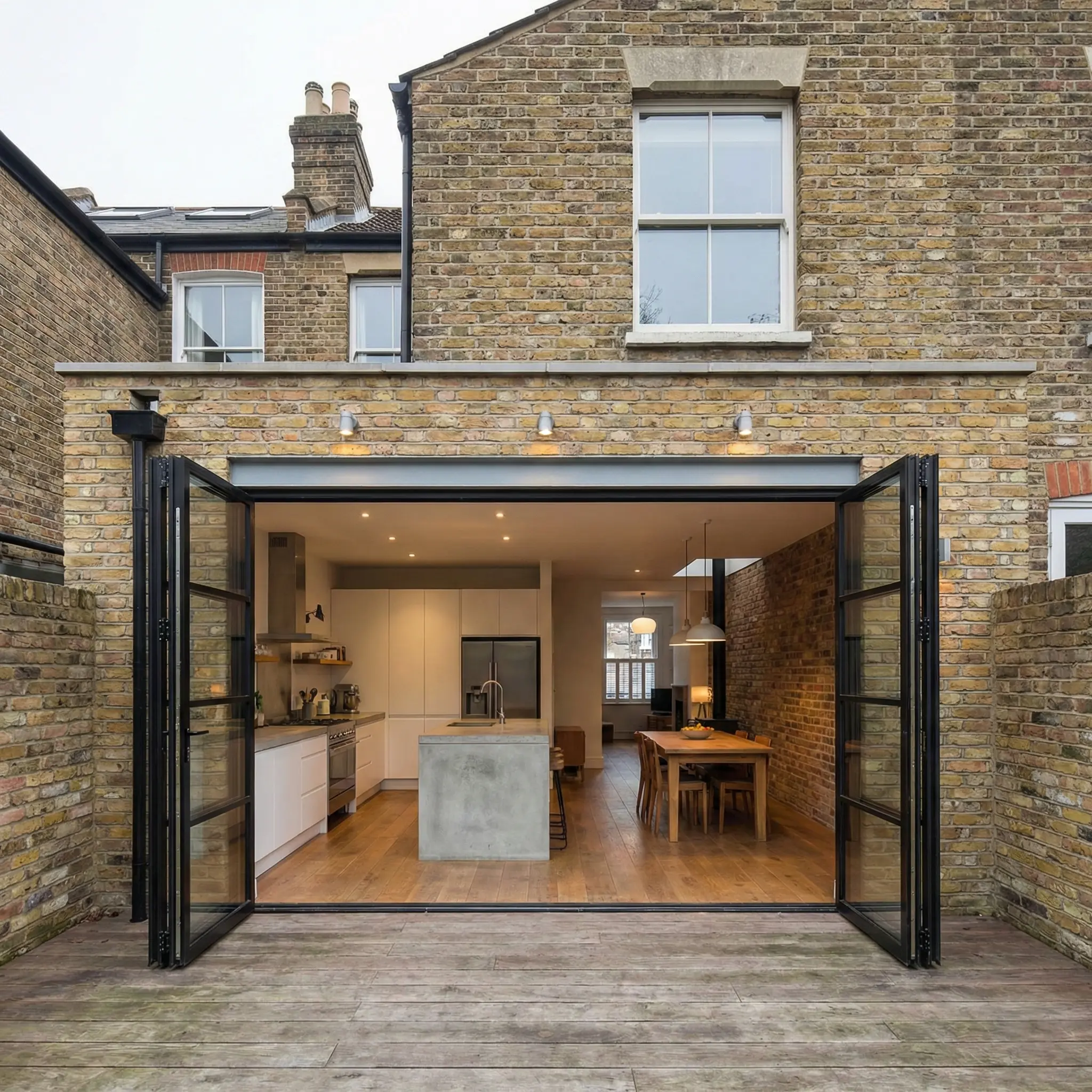
A wraparound extension combines rear and side extensions into an L-shaped addition, creating significantly more space than either alone. This approach works particularly well for corner plots or homes with underused side access, delivering a transformative open-plan layout.
What's Included
Every wrap-around extension project includes architect-led design and full technical documentation.
- Site survey including side access assessment
- L-shaped floor plan design with zoning options
- Planning application with neighbour impact analysis
- Structural design for corner junction
- Full construction and Building Regulations package
Why work with us?
- Architect-led from day one
- Fixed fees, no surprises
- Planning success rate over 95%
- Direct communication throughout
The Benefits of Wrapping Around
A wraparound extension offers advantages over separate rear or side additions:
- Maximum floor area - Fill the L-shape of your plot rather than leaving dead space
- Flexible layout - Create distinct zones (kitchen, dining, living) within one flowing space
- Natural light from two directions - Windows and doors on two external walls eliminate dark corners
- Single build project - One set of foundations, one roof, one disruption period
Planning Considerations
Wraparound extensions often require planning permission due to their scale:
- Side element visibility - If visible from the street, design quality and materials become critical
- Boundary proximity - Side extensions near boundaries may affect neighbours
- Combined footprint - Total coverage must not exceed 50% of your garden
- Height at junction - Where rear and side meet, roof design needs careful consideration
We assess your specific plot constraints and advise on the best planning strategy.
Design Opportunities
The L-shape opens up creative possibilities:
- Internal courtyard feel - The corner can frame garden views from multiple angles
- Kitchen island positioning - Central islands work beautifully with wraparound layouts
- Separate utility access - Side door for boots, bins, and laundry away from main living space
- Varied ceiling heights - Mix flat and pitched roofs for architectural interest
Common Questions
Is a wraparound extension more expensive than a rear extension?
Yes, but not proportionally. The additional side element adds around 30-40% to the cost of a rear-only extension, while potentially doubling the floor area gained.
Do I need planning permission for a wraparound extension?
Usually yes. While rear and side elements might individually fall under Permitted Development, the combined scale and side visibility typically require a planning application.
What if I have a narrow side access?
Even a 1-metre wide side return can be valuable when combined with a rear extension. We design to maximise whatever space you have available.
How long does a wraparound extension take?
Construction typically takes 14-20 weeks. The design and planning stage usually takes 8-12 weeks, including the 8-week planning determination period.